

Birdnoticing
this is crow's nest, after all

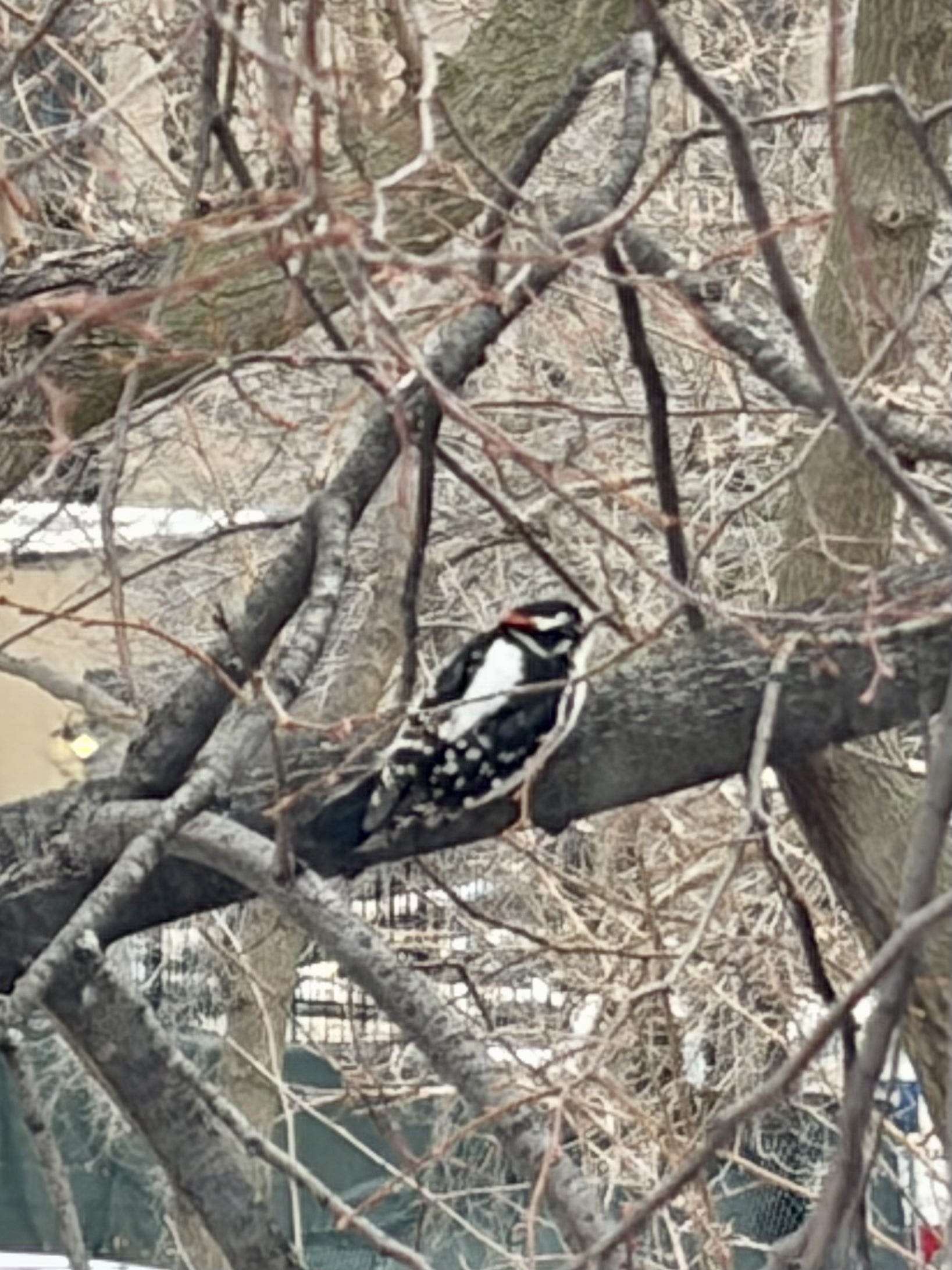
It started with a woodpecker. I was sitting at my desk, my back feeling weary from so much sitting and my cheeks feeling tight from all the reacting and empathizing they have to do over video, across the space time continuum and hopefully into someone’s brain and heart. My eyebrows carry whole sessions on their shoulders. Suddenly I saw a little body flitting around on the pine tree outside my window: black and white fluff, with a little red cap on his head. I pulled myself away from the case note I was working on and tried to follow this bird with my eyeballs, which was a challenge because he was moving with intense purpose. Peck peck peck, hop hop over to a new branch, peck peck, peek around the tree, flit to another branch, peck peck peck. I was in a trance and decided, though I knew he was a woodpecker, to google what exactly this bird was, what his name could be. “Illinois woodpeckers in winter” in the search bar, and I quickly identified him as a male Downy Woodpecker. What a rush! That’s who he is. I bid him well as he flitted off to another tree to find more bugs in its caverns.
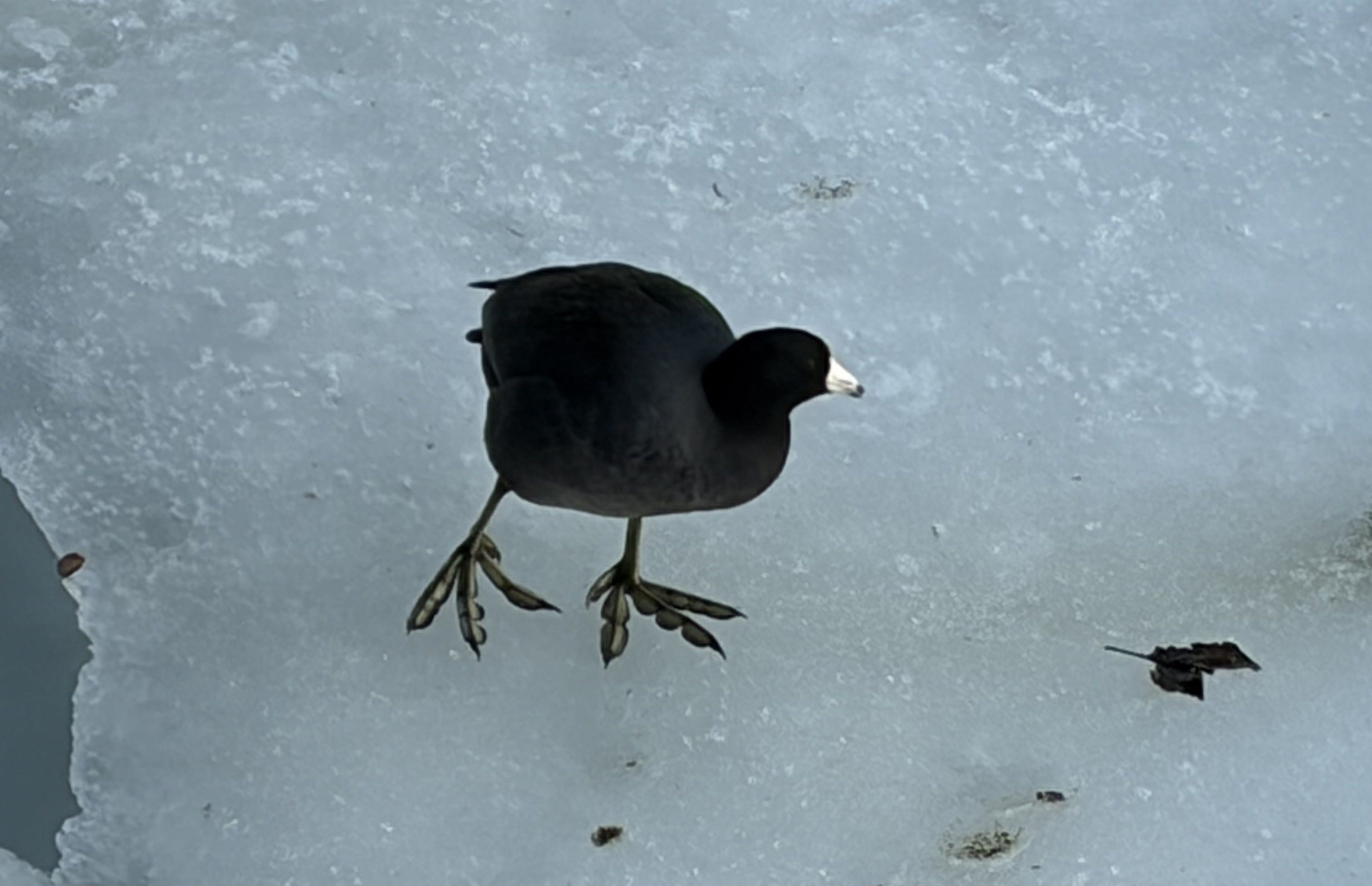
Soon afterwards I was on a walk with Michael and I looked out on the Montrose Harbor Marina and noticed a bird with an absolutely ridiculous set of shoes on. They looked like they were a size or two too big, and we stopped to take photos and discuss their uniqueness. A quick image search told us he was an American Coot, a common waterbird that has wildly webbed feet for walking in mud and swimming in open waters. I thought about whether the American Coot knows it has special feet, if the other birds in the Marina are envious or contemptuous, if the Coot is made to feel embarrassed by their built-in boots. During that same walk we met a Red-Breasted Merganser male and female. I added all these names to my growing list.
Before long I was taking walks specifically to see birds and it became a rush to notice one that I hadn’t seen before. Lucky for me we live within walking distance from a bird sanctuary, and I started to frequent it as well as join a Facebook group in which fellow bird-watchers posted their bird photography and named all the birds. This way, I started to learn what species tend to frequent the area, especially during migration season, and when I would go myself I could keep my eyes peeled for these friends I’d seen in pictures, like a scavenger hunt or a paparazzi stake out. I’ve walked around Montrose hundreds of times in my life, but never had I noticed how many people carry humongous lenses and cameras or binoculars, who stand along the edge of the harbor or walk quietly around the sanctuary, just there to see whatever flies by. Or whoever.
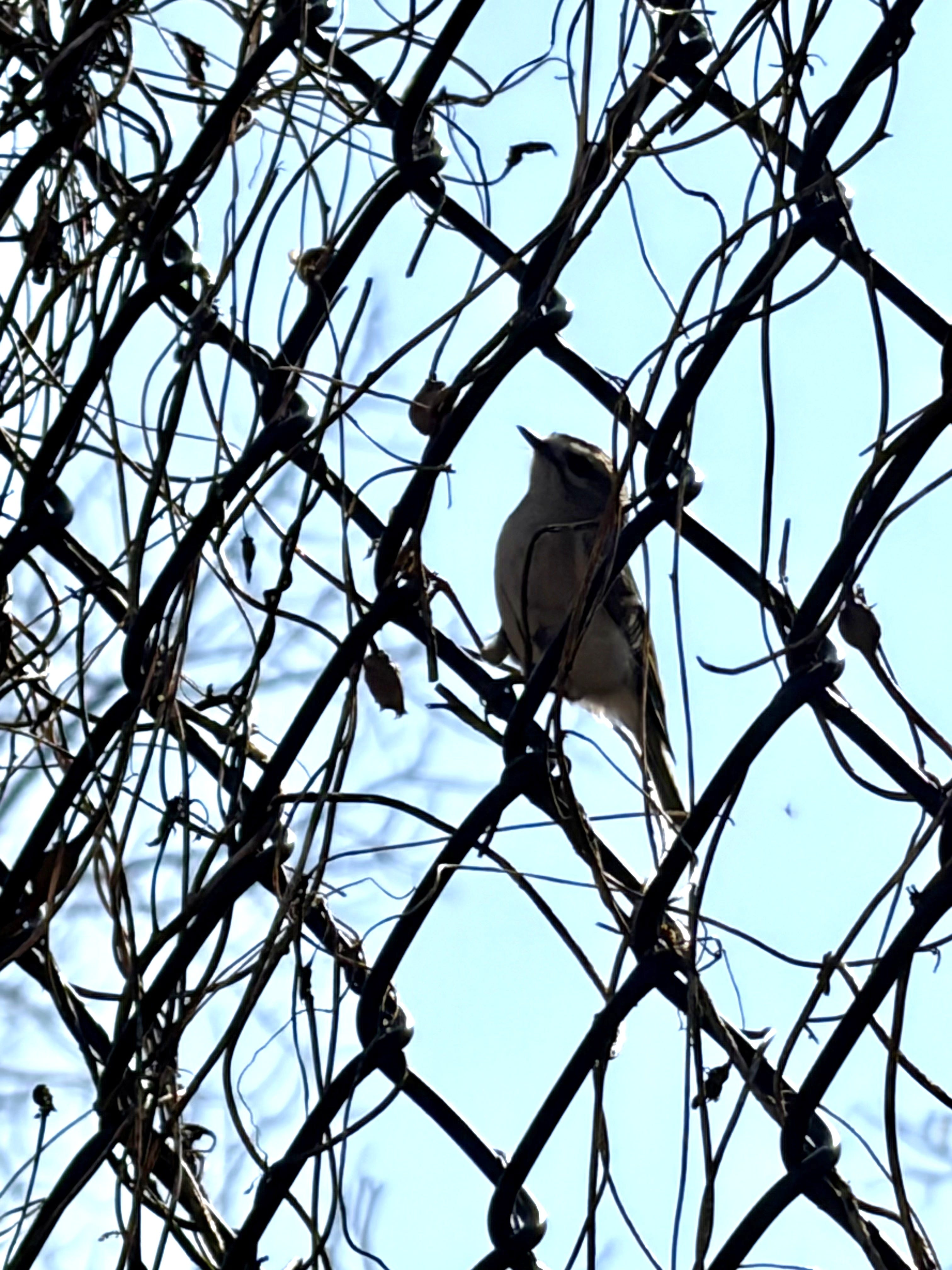
“Who are you?” This is the question I’ve started to ask in delight when I see a bird I don’t recognize. “Please stay nearby long enough so I can get to know you and learn your name.” This act of searching the skies for names and new friends was like discovering a whole other universe that was at your fingertips before, but now you’re a part of it, now you can play with the creatures there. When in the past I looked out on Lake Michigan and saw a group of ducks, now I see Horned Grebes and Mergansers and Lesser Scaup and Buffleheads. In the trees I see Red-Bellied Woodpeckers and Dark Eyed Juncos and an adorably small Golden-Crowned Kinglet. It’s tempting to gamify this new hobby, track it like every other consumable thing like a book or movie, give ratings or levels or to feel competitive. I have a list of the names of birds I’ve seen so far this year, but mostly to remember them so I know for next time.
(video caption: what I believe is a juvenile Horned Grebe figuring out how to swim and fish! look at his little feets!)
Birdwatching (or to me, birdlearning and birdnoticing) is more like a meditation than anything. Binoculars and cameras can only reach so far: the bird will fly away eventually. Better to appreciate them while they are in front of us, for the time being, without expectation that they will stay. It’s a meditation on letting things go, on noticing the big and small details around you in nature, on feeling part of a bigger thing. Many of the birds at Montrose are preparing for their journey north for their spring migration, and I love wondering how long they will stay and where they will go next. Through my binoculars and feeling like a superhero with a power that only I possessed, I watched as huge groups of Double-Crested Cormorants flew in flowing formations just over the surface of the lake before landing, one by one, in the water to fish. Without my super-seeing strength, they would have looked like tiny dots in the distance, but instead they were a stunning and elegant group recharging for their next leg north. The edge of Lake Michigan that we shared was only their temporary home, and it is only my temporary home, too. We are all only here for so long before our next big journey onwards.
here for the bird content and the nina content